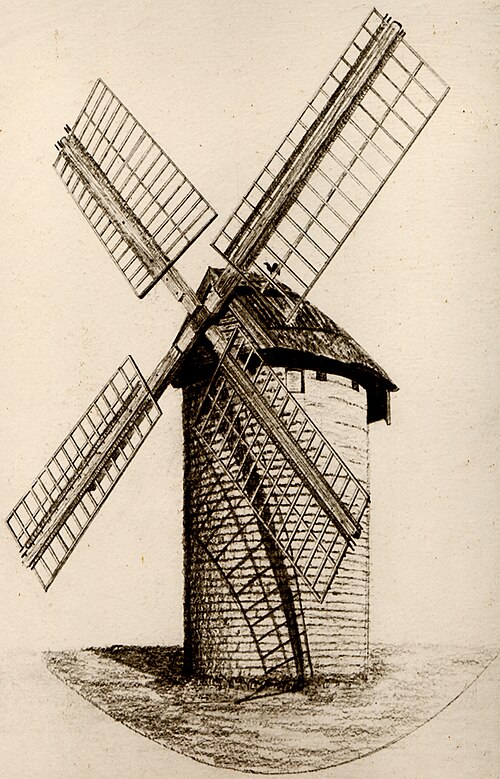
A strangely compelling work of local history. Bafflingly, it begins by noting the windmills of
Somerset are both technically and aesthetically inferior to their Devon and Cornish relatives
without any kind of compensatory statement. We begin seriously questioning what it is
about these windmills which is worth documenting. I suspect however that this was in fact
a clever narrative device, for what quickly emerges is the magic of the Somerset windmills
and, of course, the hunky men who worked them.
Many of the windmill stats are pedantic and boring, and the chronicles of individuals
windmills are as dry as dust. No - it is the bizarre slice of life anecdotes about the
windmillers that make this so readable. We tour Somersetian 'cider houses', dark rooms
filled with barrels of cider which our tourguide takes dram after dram from, and listen to
accounts and potted geneologies of old windmilling families, and the young windmill
operators who keep it all running. There is action: the Somerset windmills cannot fold their
sails away (see 'technically inferior' above) and so when a typhoon sweeps over the fields
the sails race around faster and faster, uncontrollable and fearsome - the old windmiller cries
for his younger son to run and slam the breaks on, the crank shaft rotating so quickly that
the friction throws off great showers of sparks. Imagine the typhoon blowing wave after
wave of invisible force across fields of wheat and barley, and the lines of windmills on the
horizon, watching over the sea below, spinning wildly in a frenzied, manic dance. There is
romance: the young windmiller boy falls in love with the daughter of a local landowner and,
thinking she is calling him, rushes out only to come inches from death when the windmill
sail slashes the air near his head. And we see the twilight of the windmills as they are
replaced by petrol powered trucks which change the economic calculus of where you grind
your grain (poor roads to windmills means proportionately greater cost to transport grain
and back). And of course the last windmill in Somerset closing in 1960.
Now all we have left are the ruins of our beautiful windmills, accumulating moss and mould
as the sails remain still and the stones are left untended. It makes you realise the world used
to be a more detailed place. I know this sounds nostalgic and patently incorrect ('we live at
the forefront of history'), but complexity comes in many forms. We have lost geographical
and physical diversity in our lives. We use one tool for everything; one process for all food;
we all speak the same and act the same. We have standardised the small things in life. I
remember reading a graphic novel which documented all the strange, small things on the
American street corner which have vanished - nut sellers, show shiners, traffic cops.
And windmills. And the men who worked them
Dr. Alexander Thompson