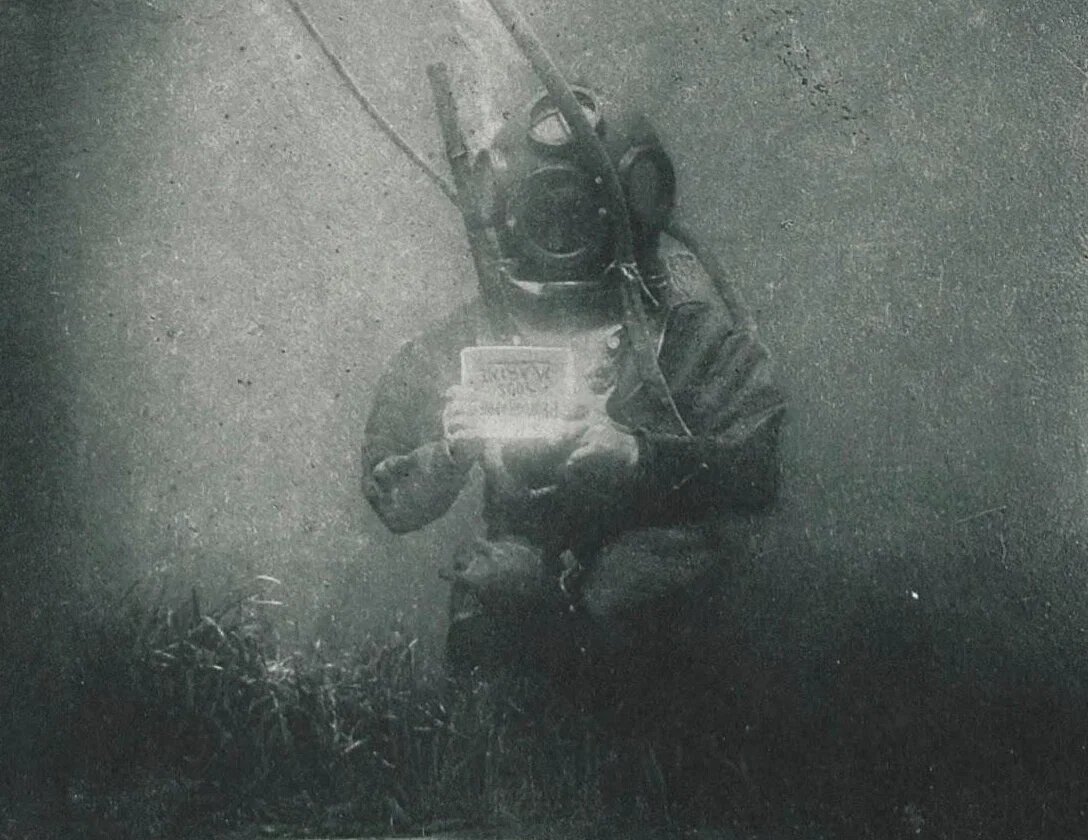
An underwater photograph by Louis Boutan, 1899, Source.
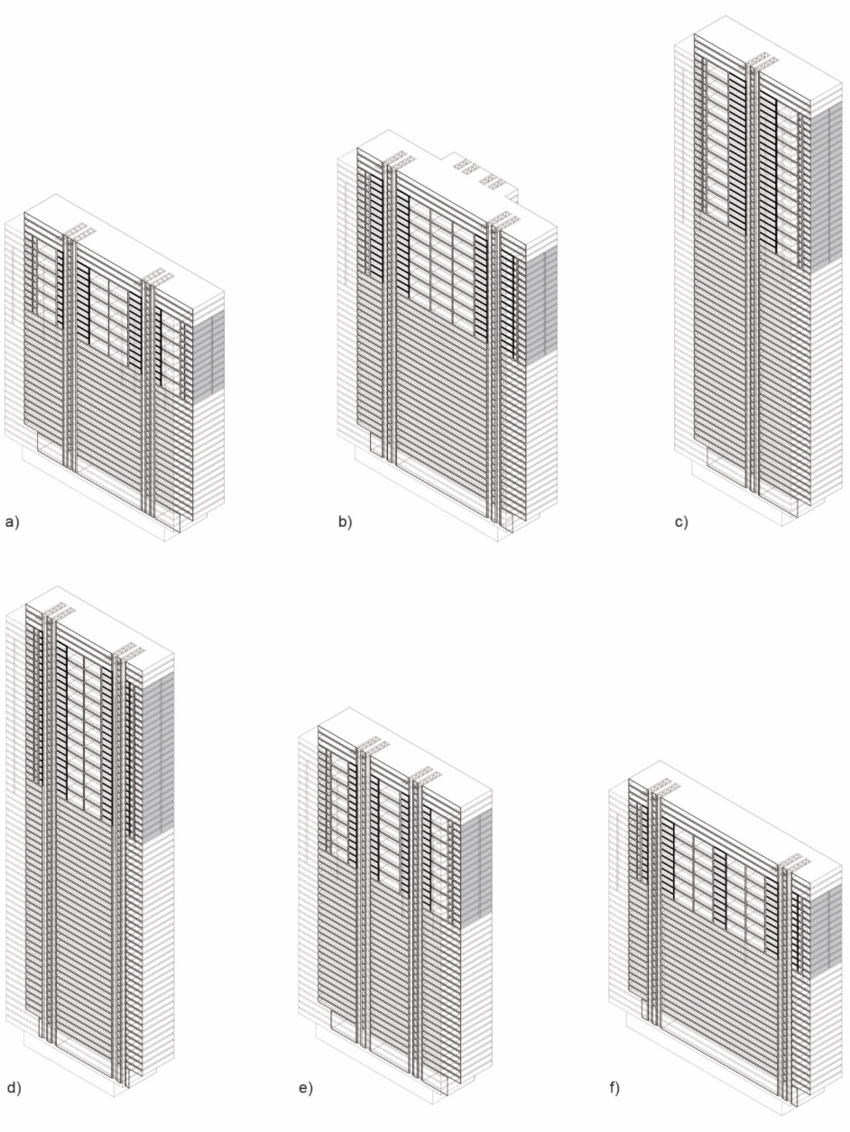
As my mother says: you can always judge a book by its cover. Good articles, whether online or in print, have memorable and apt images. But how do you find the right picture for the job? Devising concept-image pairs is not always a conscious process. Here is an example: I wanted to illustrate the concept of 'Leximetrics' (quantitative studies of the legal system) in my Legal Science book and was completely stumped. Then one day, staring blankly at an empty document, I remembered these theoretical prison designs:
Each design satisfies the formal criterion of having "24 courtrooms and appropriate volume of public, office and supporting space."
This was mostly luck: I just happened to have read the research paper this image was from. Matching concept to image is most effectively acheived if you have seen plenty of images and can retrieve suitable examples from memory. That said, you can always increase your odds by using repositories which have been designed by those with discernment. Even if you can't get the ideal image, rest assured you will get one which is beautiful and well-crafted.
Useful Internet Repositories
There are a few internet repositories I like to use. They have a good mixture of curation and volume, such that I can find an image for most of my needs without having to do too much sifting. I have listed them in order of preference.
Public Domain Review. Excellent array of images, great curation, left-field - sometimes the only version available online - and gives historical context. Also check out their wider archive for pictures in their archive without attached essays
Smithsonian Open Access and Met Public Domain . High volume so you need to do more searching yourself. Search function is pretty good, but make sure to filter: I tend to filter by "Drawings" and "Etchings." The Image Library is more focused on book illustrations.
New York Public Library Not as good as Met PD for illustrations, but has a much wider range of adverts, maps, and 'technical images.'
Wooden Books Library Books filled with curated images; some books are much better than others. A great place to go hunting, especially for STEM topics. I like Shadows quite a lot; note, original illustrations in these are not Public Domain...!
Bibliodyssey. Quite good and rather obscure. Collection of beautiful illustrations from old books.
Illustrators are your friends
18th, 19th, and early-mid 20th century illustrations are out of copyright and fit nicely in between writing. In particular, newspaper illustrators and frontispiece illustrations: these are explicitly designed to flow between text. If you are using google/AI to search, make sure to be very specific, otherwise they will spit out garbage. Here are a few sorted by topic:
Science, Modernity, Rationalism
Art of Winsor Mccay These are only a few examples of Mccay's art, there are many others elsehwhere of a more fantastical nature. I love Mccay's style and find it strangely compelling from a rationalist perspective.
MC Escher Feels a bit mad to recommend Escher but what the hell. Very interesting & brilliant artist. If you like escher also try Ernst Mach, on Public domain review naturally.
Eli Lissitzky Russian constructivist; excellent for abstract articles. One condition: extremely deductive and platonic. No good for empirical or inductive articles. Look out for other constructivists to get more good pictures in this vein.
Romance, Love, Adventure
William Blake Superb for anything religious or mystical. Blake has fantastically strange and weird illustrations. Naturally all on Public Domain Review.
Ivan Bilibin and Virginia Sterret. Hard to go wrong with classic fairy tale illustrations. These are just two; there are plenty more to be found elsewhere.
Japanese Ukiyo-e Archive I like the peacefulness of Japanese woodblock prints; the archive linked is usefully arranged chronologically, although possibly too vast for easy use. I would recommend Hiroshige and Kawase Hasui. If you want something more western, try the mezzotint artist Peter Ilsted.
Instagram can be a serendipity machine
Your Instagram feed can be your greatest ally or your greatest foe. It's like the twitter of images. I recommend following illustrators and artists as they will re-post interest work on their stories daily. Over time you will build up a collection of images which you can draw on freely. Here are a few basic, generalist pages that I like:
Equator Magazine Obscure book and magazine images of the human species. Gives a 'lost to the mists of time' feel.
Retro Scifi Art Hardly obscure, but consistently interesting. A good source for old sci-fi book covers. Follow who they follow.
Humanoid History. Interesting assemblage of retro-futuristic images. Good source for 'lost futures'.
History of Art and Ars Mundi. These are the ClassicFM of history of art, but nonetheless a good place to start. Plenty of fun images, especially good for romance. The former does sometimes drift into self-promotion.
The great thing about a well-curated Instagram feed is that you passively absorb new images and ideas constantly. Over time you might find yourself enjoying art you had never imagined you might like; that is the true value of selecting your pictures carefully. Even if perfection remains out of reach, even if the words are not quite in the right order, you nevertheless come one step closer to the perfectly wrought piece.