When the High Street Eats the Harbour
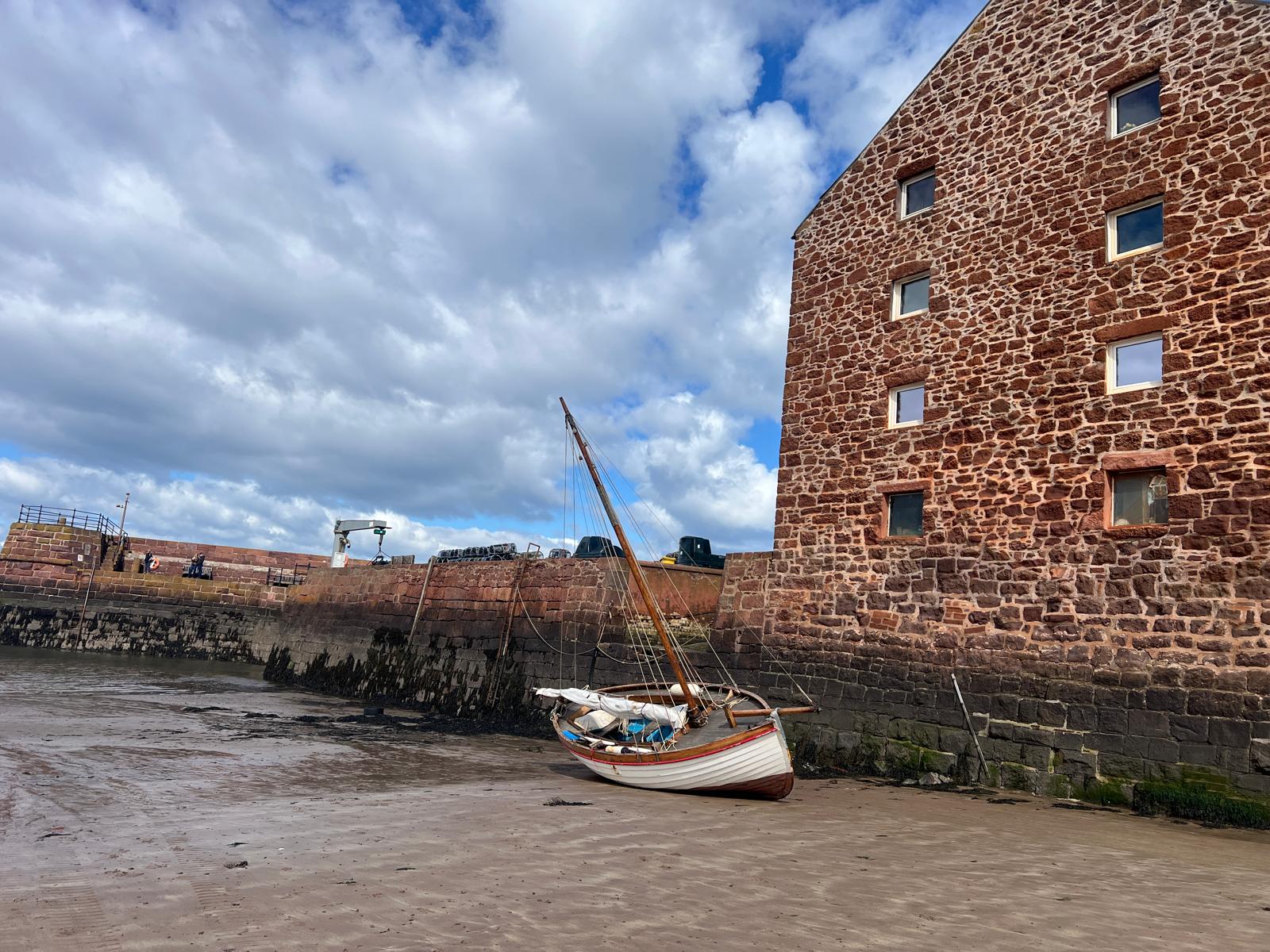
The North Berwick harbour is a sacred place for my father. When we walk the dogs on the beach he will often suggest we go to the harbour to “see what is going on.” Invariably, nothing is going on. Nonetheless, we meander around, look at the sea, maybe speak to a few sailors, get a read on the wind. The harbour has its own rhythm and calendar of rituals. On Fridays, children sail on small boats around the bay; on Saturdays you can see the traditional wooden skiffs rowing around the local islands. Once a year, my father’s best friend Robbie Whiteman launches his boat Paragon II for the new sailing season.
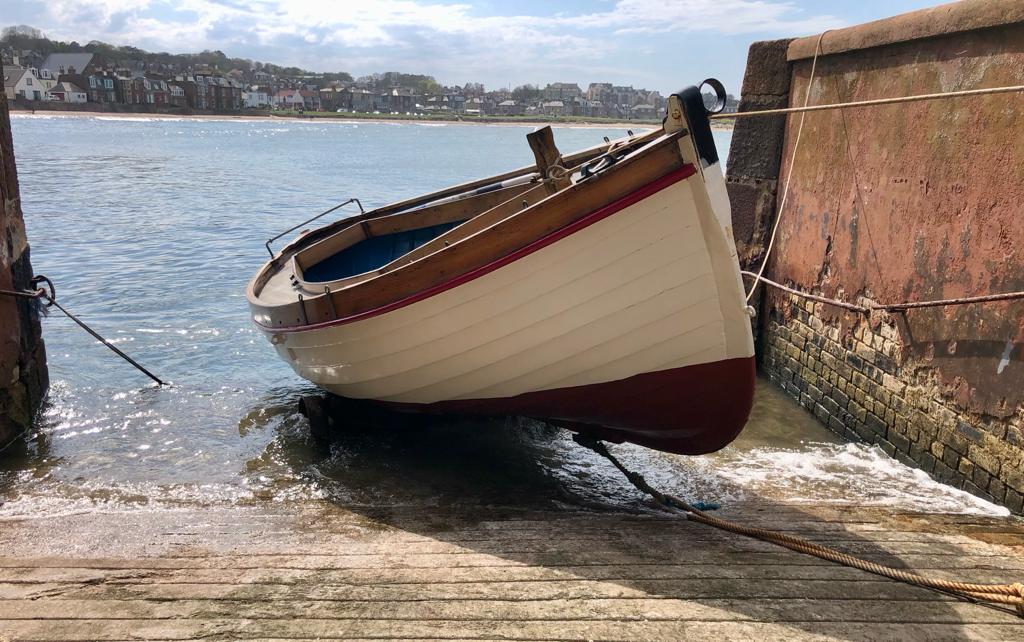
Paragon II is made entirely of wood and, for some unknown reason, Robbie Whiteman insists we launch her with 1930s cast iron rollers. It takes 5–6 strong men to hold the ropes as she is lowered into the North Sea. Then there is the first voyage of the season, often to Fidra, a nearby island which inspired Robert Louis Stevenson’s Treasure Island.
The harbour is under threat. The North Berwick high street, home of 8 different hairdressers, 9 cafes, and 14 gift shops, is encroaching upon its territory. Every year, more stalls selling homemade soap, trinkets, gift cards, and hipster coffee spring up:
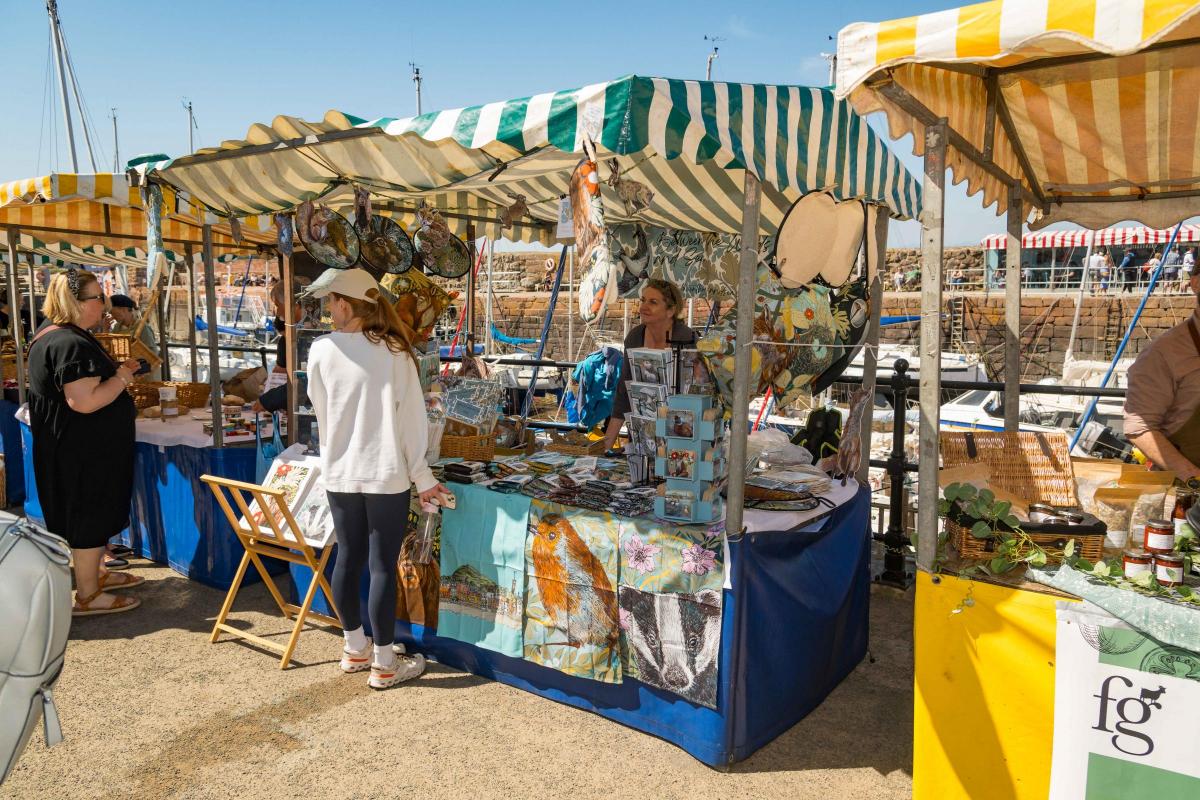
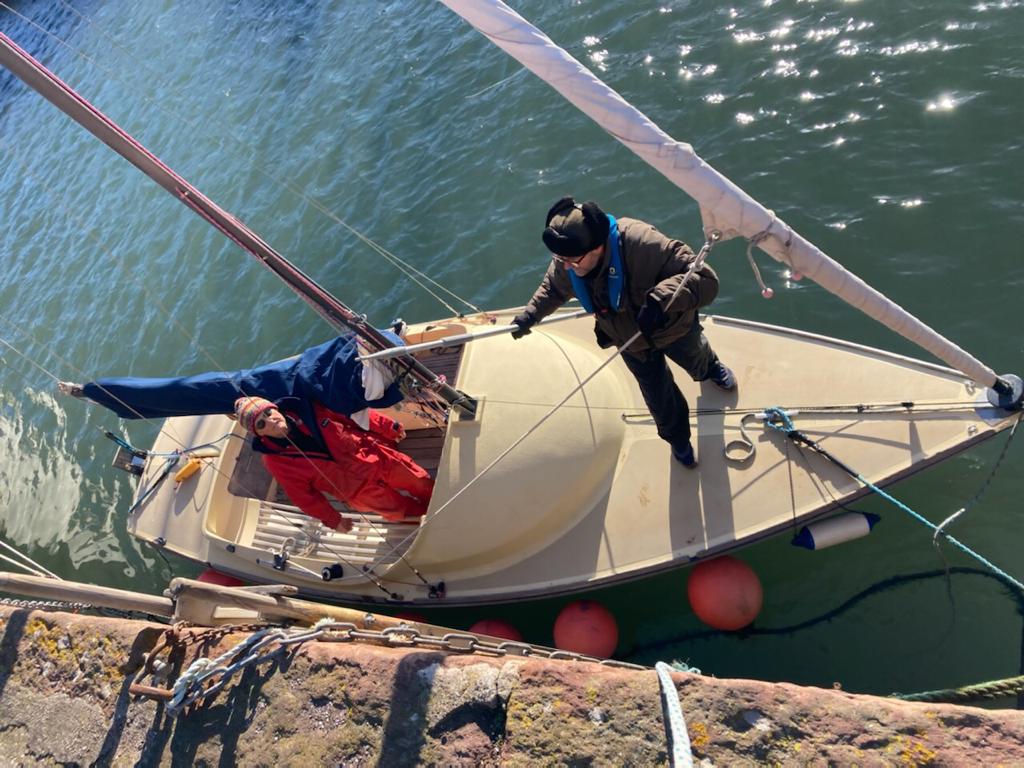
My dad reacts to this incursion in much the same way Jesus did the merchants in the temple. To get to his wooden boat (a Mirror Mk. 2), he must wade through throngs of tourists buying tat. He must fend off dolts asking “is this a boat museum?” and “are these for sale?” as he rigs the boat. And he must part the sun-cream slathered sea to pull his boat to the shore for launch. One day, wistfully looking out at the sea-sky, attempting to tune out the loud voices hawking things, he sighed “the harbour and the high street should be separate.”
My father and I feel suffocated by these changes. It is not the negative suffocation of a chokehold, but the positive oppression of Too Much: pumped full of air, buried in superabundant matter, crushed amongst an enormous crowd. The town councillors, directed by the High Street money, believe in the ‘permeability thesis.’ Removing trade barriers, increasing the velocity and volume of interaction, and pumping up population, making everything more ‘permeable’ and ‘frictionless’, will invigorate the town. How wrong!
Too many people around a table snuffs the conversation out rather than stimulating it. Online subcultures which are too open to new members lose their identities and become bland. A room which is completely open-plan feels vacant and lifeless, rather than ‘open, free, and ready for connection.’ Take my current home: sofas for relaxing; whiteboards for work; the kitchen for cooking; trays for collecting delivered meals; the reception for entrance; the fireplace for lounging; benches for working/eating: all in one, colossal, de-differentiated room. No-one relaxes in the panopticon.
My father and I resist the turning of the tide. A harbour filled with coffee shops, stores, and hairdressers will be reduced to a harbour-themed part of the high street. North Berwick will lose some of the character that brings people to visit in the first place, a train station connected to a shopping centre, faint lines on the ground showing the old territories of harbour, church, park, and community centre. Over time it will be no different from other towns with similar chains, products, and services. Over time, all parts of East Lothian will be connected, and then Scotland, and then…
The councillors are surprised by the resistance to this grandiose plan. I saw the same disbelief in my local high school. The ‘Senior Leadership Team’ commissioned ‘social spaces’ for the students, but these were unpopular because they were too open-plan, far too close to the cafeteria, and teachers entered freely in and out. The team couldn’t understand why pupils preferred the dusty spare classrooms or neglected storerooms for their unofficial clubs. What was so great about the art cupboard? Why did the students prefer the vestigial ‘History library’ filled with old books? The Leadership was baffled but I knew why: it was the same thing that drew my father to the harbour.
The ‘quality without a name’, or ‘value of variety’, or whatever you want to call it, is highly illegible. It is closer to an aesthetic preference than a set of propositional values. One does not defend the principles of cultural variety in debate, but gestures to their obvious appeal. We prefer bounded, coherent spaces with distinct functions, histories, aesthetics, ideals, and character, over the newly standardised and efficient.
Over time, the High Street has been defeating the Harbour across society. When I was in primary school, and then high school, I was taught that the High Street eating the Harbour meant progress. The endless march towards the future was achieved by destroying one barrier at a time. Town-twinning, social-media connection, open borders, scientific collaboration, international organisations, the UN, the WHO: more, more, more connection! It was assumed that linking up the world was both morally just and, conveniently, the source of modernity’s vast material wealth. All people would be fungible, all cultures would interchange, we would become ‘citizens of the world.’
You might assume my father and Robbie Whiteman would resist this corrosive gospel. Not so, because although they are culturally conservative they are also politically liberal. They assume that even though the Harbour needs to be protected, it is up to everyone else to decide what to do. They march in lock-step with the teachers at school. I remember being taught that local communities were disappearing in one lesson, and then the next that nations were a myth, high mobility inevitably, and traditional moral authorities necessarily suspect. This is not a good cultural DNA for producing future harbour-defenders, and so the ranks of the few defending the harbour have slowly thinned.
Robbie Whiteman’s resistance to the market stalls appears like a lost cause. I often joke with my father that Robbie is a man well out of time, perhaps from the 1920s or ’30s, rather than the 1990s. At the same time, more obscurely, you can see him as a man from the future. There are new rumours being spread against the dogmas I heard in my “Modern Studies” class: what if local culture was more effective than global cooperation? Look at China: how can they be so successful with such a closed society? What if opening up the channels of communication, widening markets, and increasing trade velocity and volume does not make science go faster?
In this cosmology, the unit of progress is the bounded team doing scientific and technocratic work. They possess some kind of secret cultural sauce, some special code, some set of values which is unique to them, and which would be diluted, even ruined, by allowing members to come and go freely. Inexplicably, the Robbie Whitemen of the world meet these scientific elites and increasingly find allies: yes, the latter say, the culture you sustain is an input to our success. They say, “one isolated Bell Labs is better than a hundred mediocre firms cooperating globally”, and whisper, very quietly, that Bell Labs needed the right blood and soil to grow.
It seems the winds of change are blowing in the direction of the Harbour. Exposure to the ultra-permeable internet has radicalised many young people against unlimited connection. Localism at every level grows stronger, as do the reactionary forces against ‘Cosmopolitanism’ and ‘Open Borders.’ But I am not convinced that they are the friends of Paragon II. It is hard to imagine a cultural conservatism of the gentle, local variety emerging from a technocratic, nationalistic government. Instead, I see new central forces with their own hostile attitudes towards Harbour life. “Hmm, would it not be better as a nuclear power station?” Or the home of the new ‘Party Official’? Or maybe the whole thing can be demolished to build a ‘Great British Sea-Shopping-Centre?’ In the wreckage, my father and his friends will long for the corrosive, albeit mostly incompetent, forces of the North Berwick High Street.